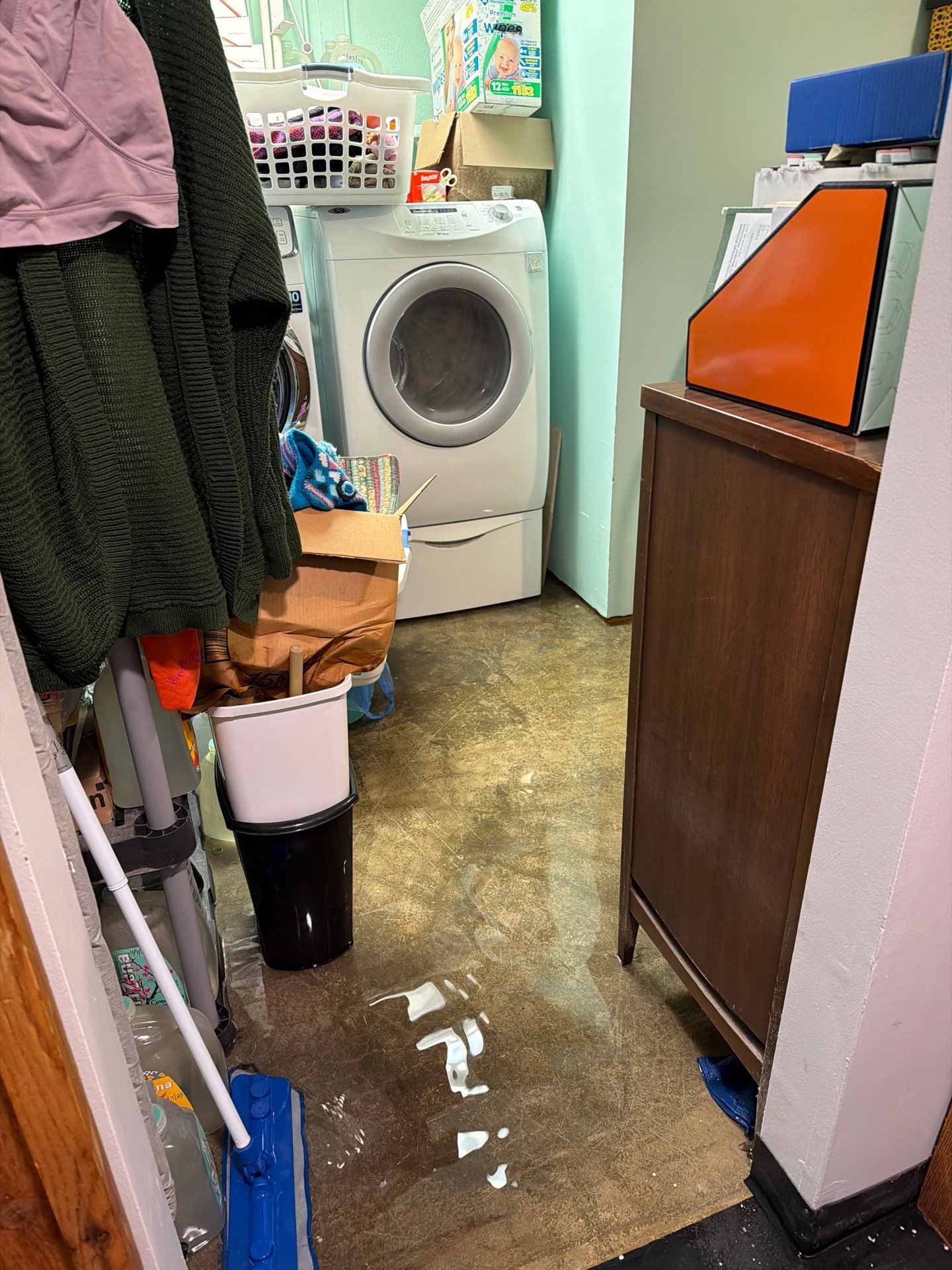
Problem: You Cannot See Where the Water Actually Went
Water follows gravity and capillary action, not your line of sight. A burst supply line under a Princes Lakes sink can soak the cabinet base, run along the subfloor seam, drop into the joist bay, and end up twelve feet away inside a finished ceiling below. A shop vac pulls the puddle. It does nothing about the water you cannot see.
Solution: Moisture Mapping With Calibrated Meters
Professional crews use pin and pinless moisture meters, thermal imaging, and hygrometers to map the true wet footprint. We document baseline moisture in unaffected areas, then chase elevated readings through walls, cabinetry, and flooring. That map drives the drying plan and, just as important, gives your insurance adjuster the proof they need. Thermal cameras alone are not enough, since they show temperature differences rather than actual moisture content, which is why Princes Lakes Water Restoration pairs imaging with pin meter confirmation on every wall cavity flagged as suspect. If you want to understand how hidden moisture shows up later as warping, staining, or musty smells, our piece on signs of hidden water damage in your home walks through the early warning indicators.
Problem: Household Fans and Wet Vacs Do Not Actually Dry a Structure
Box fans move air. They do not remove moisture from the air, and they do not pull bound water out of framing lumber or drywall. A 5 gallon wet vac handles surface water, but the IICRC S500 standard for water restoration calls for controlled evaporation, dehumidification, and temperature management working together. Without that balance, you are just blowing humid air around your Princes Lakes home and feeding mold spores the conditions they need.
Solution: Commercial Air Movers and LGR Dehumidifiers
A typical drying setup in a single flooded room runs 4 to 8 air movers and at least one low grain refrigerant dehumidifier capable of pulling 100 to 130 pints per day. Larger losses scale up from there. Most properly mitigated jobs dry in 3 to 5 days with daily moisture readings logged. Hardwood flooring, plaster, and dense pack insulation can require specialty drying mats or injection systems that force warm dry air directly into the affected cavity, which a homeowner rental simply cannot replicate. If you are curious about the timeline, our professional drying timeline breaks it down hour by hour.
Problem: Insurance Claims Require Documentation You Probably Did Not Capture
Homeowners insurance carriers want photos of pre mitigation conditions, moisture readings, scope of damaged materials, equipment logs, and itemized invoices that match industry pricing software like Xactimate. A homeowner doing DIY cleanup almost never has this, and adjusters routinely reduce or deny claims for that reason.
Solution: Claim Ready Documentation From Day One
- Time stamped photos of every affected area before we touch anything.
- Daily moisture and humidity logs through the dry out.
- Xactimate aligned line item estimates the adjuster recognizes.
We work directly with your carrier so you are not stuck translating between two professions while your floor sits wet.
Problem: Mold Starts Growing in 24 to 48 Hours
This is the part homeowners underestimate the most. Mold does not need a flood to take hold. It needs moisture, an organic food source like drywall paper or wood, and roughly 48 hours. By the time you finish a DIY weekend cleanup in Princes Lakes, the colony may already be established inside the wall cavity where you cannot see it, smell it, or treat it with surface cleaners from the hardware store.
Solution: Aggressive Drying Plus Antimicrobial Treatment
Professional mitigation hits that 48 hour window hard. We extract standing water in the first visit, apply EPA registered antimicrobials to affected surfaces, and set drying equipment before the day ends. In most cases, our crew is dispatched within 2 hours of your call. That speed is what separates a clean restoration from a mold remediation job two weeks later.
Problem: Structural Materials React Differently to Water
Engineered hardwood, solid hardwood, laminate, LVP, and tile each respond to saturation on different timelines. Laminate swells and delaminates fast. Solid hardwood can often be saved if dried within the first few days. Drywall wicks moisture vertically up to 24 inches above the water line, which is why cut lines need to be measured, not guessed.
Solution: Material Specific Drying and Selective Demolition
Princes Lakes Water Restoration technicians assess each material against its drying ceiling and decide what stays and what comes out. Saving a hardwood floor with mat drying is almost always cheaper than replacement, but only if the call comes in fast. Selective demolition, like flood cuts at 2 or 4 feet, preserves the materials above the wet line and keeps your rebuild scope smaller.
Problem: DIY Often Costs More Than Hiring a Pro
Renting equipment, buying antimicrobials, replacing materials that could have been saved, and paying out of pocket for damage your insurance would have covered adds up fast. We have seen Princes Lakes homeowners spend $3,000 to $6,000 on a DIY attempt that ended with a $15,000 mold remediation. Professional mitigation, often covered by insurance minus your deductible, would have run less from the start.
Problem: Not All Water Is the Same, and Category Matters
There are three IICRC water categories. Category 1 is clean supply line water. Category 2 is grey water from appliances or aquariums, carrying contaminants. Category 3 is black water from sewage, ground flooding, or any source that sat long enough to grow bacteria. DIY cleanup of Category 2 or 3 water is not just risky, it is a health hazard. You will notice the smell first. The pathogens you will not notice at all.
Solution: Source Identification and Proper PPE Containment
- We identify the category at the source, not by appearance.
- Category 2 and 3 losses require antimicrobial application, removal of porous materials, and containment to prevent cross contamination.
- Affected carpet pad, drywall below the wet line, and insulation come out and get disposed of according to local Princes Lakes regulations.
It is also worth noting that clean Category 1 water can degrade to Category 2 within 24 to 48 hours if left untreated, and to Category 3 shortly after that. The clock starts the moment water leaves the pipe, not when you notice the damage. If your situation involves a backed up toilet, floor drain, or sewer line, do not touch it without protective gear. Our sewage cleanup service is built for exactly this scenario.